Why Your Co-Packer Wants a Plant Trial (And Why They’re Right)
Every founder I’ve worked with hits the same wall: the quote for a plant trial lands, and the instinct is to find a way around it. Here’s why that’s the most expensive corner you can cut.
When you’re launching a new product or making a real change to a formula, someone will eventually recommend a plant trial, a test run on production equipment before you commit to a full commercial batch. And almost every early-stage brand balks at the price. It feels like paying for a rehearsal when you’re confident about the show.
I understand the reflex. But after years on the co-packing side, I can tell you the plant trial is rarely where money gets wasted. It’s where money gets saved. You just don’t see the disaster it prevented.
Your kitchen recipe is not a formula
This is the hardest thing for a first-time founder to accept: the thing that works perfectly on your counter is not the thing that will come off a production line. It’s a starting point, not a finished product.
In your kitchen, you work in pinches and dashes. You feel the dough. You pull it when it looks right. You make a hundred small corrections without even noticing you’re making them. None of that survives contact with a plant. On a production line, those pinches become drums and vats, your instincts become fixed settings, and your judgment gets replaced by tolerances someone has to define in advance.
Scale changes the product itself. Mixing behaves differently at volume. Heat moves through a large mass at a different rate than it does through a small one. Ingredients that cooperated in a bowl can separate, seize, or shift texture when they’re processed at speed. A shelf life that held up on your shelf can fall apart under real distribution conditions. None of this means your product is bad. It means the recipe and the manufacturing process are two different problems, and the second one has to be solved on purpose.
What the trial actually buys you
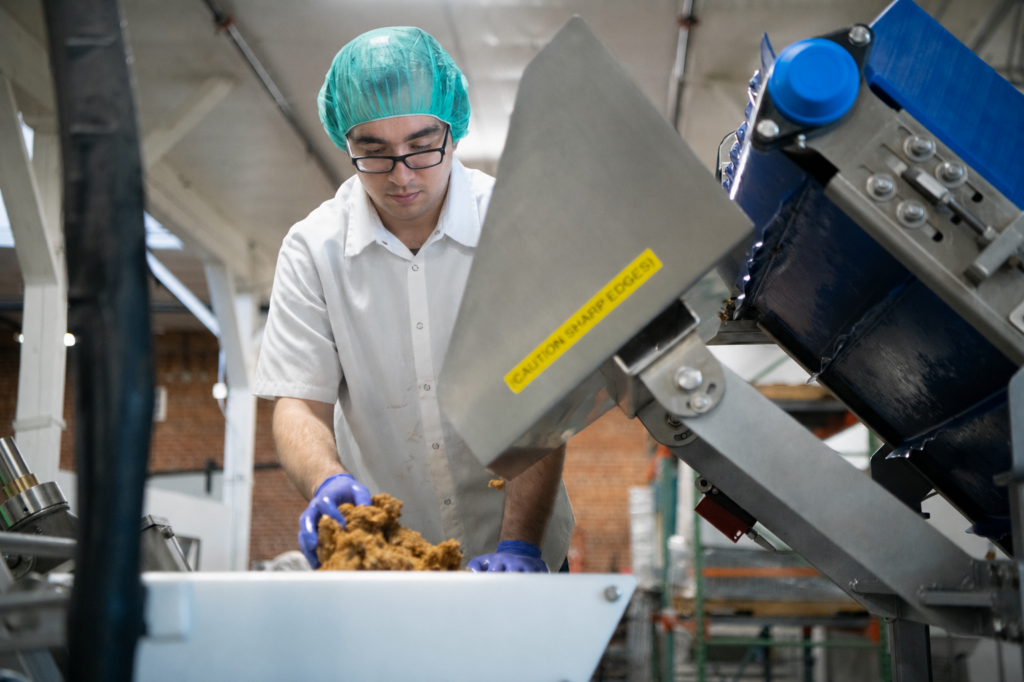
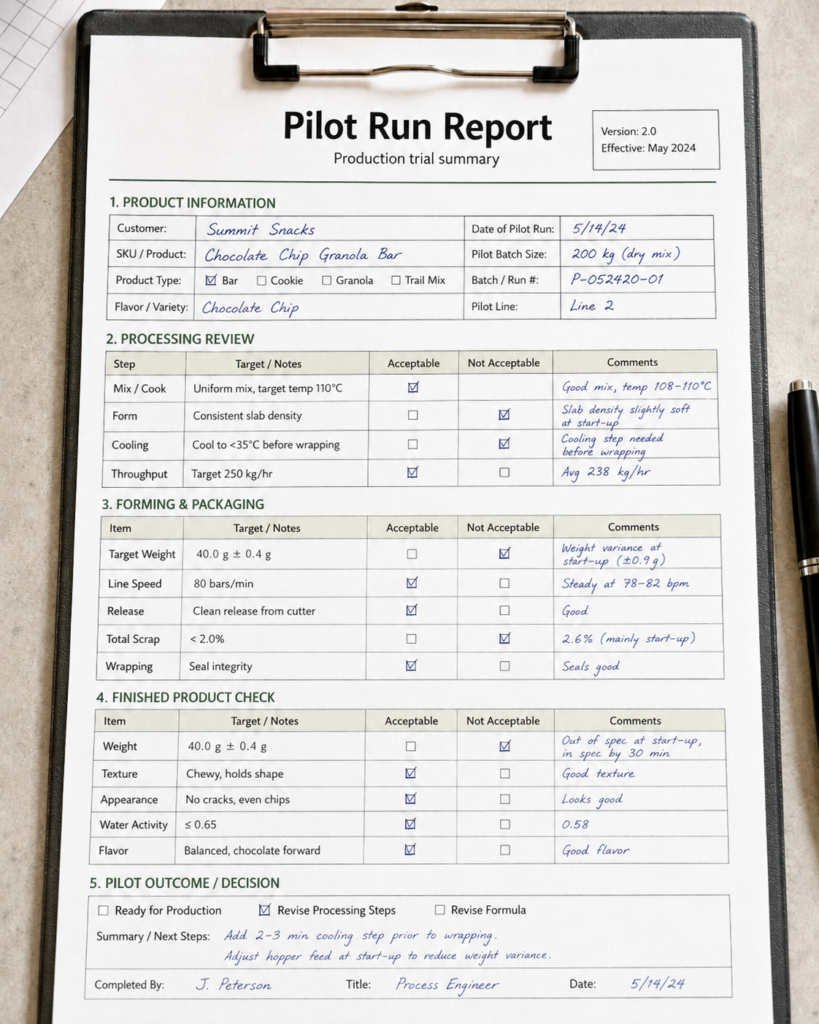
A plant trial is the transition zone between those two problems. It’s where a kitchen recipe becomes a process formulation, and where you find out, cheaply and on purpose, what breaks.
The alternative is finding out during a real commercial run, and that’s a completely different price tag. A full production batch means you’ve committed to ingredient volumes, line time, packaging, and a delivery date. If the product doesn’t come out right at that stage, you’re not troubleshooting anymore. You’re eating the cost of a failed run, scrambling to explain a slipped launch, and possibly walking back promises to a retailer. The trial exists so that the expensive version of that lesson never happens.
There’s a reason established processors keep pilot facilities of their own. They’re not being cautious for its own sake. They’ve learned that the cost of testing a change is a rounding error next to the cost of getting a full run wrong.
How to think about choosing a facility
If you don’t have access to a pilot plant of your own, and most emerging brands don’t, you’ll be looking at a co-packer or a third-party pilot facility to run the trial. When you evaluate one, a few things matter more than anything else.
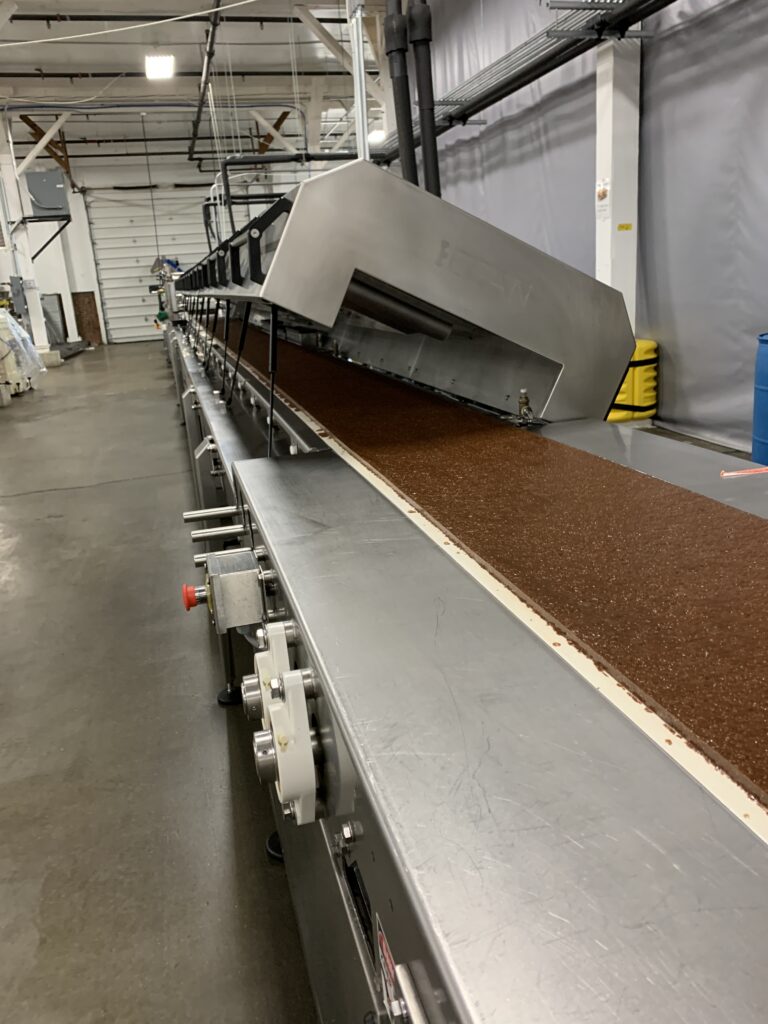
The first question is the most basic one, and the one founders skip: can they actually run your product on the equipment they have? Not whether they’ll reconfigure a line around you, because they won’t. They have the equipment they have. The real question is whether your product fits what’s already on their floor, and just as important, what it’s going to be like coming off that equipment. The same formula run on a different mixer, a different oven, a different fill line will not come out identical to your bench sample. You want to know that before you commit, not after.
That leads to the second point: the trial has to resemble the process you’ll actually use at full scale. A run that looks nothing like your eventual production setup gives you answers to the wrong question. The closer the trial equipment is to what a commercial run will really involve, the more you can trust what you learn from it.
The third is regulatory and quality standards. The facility and its equipment should meet the standards you’ll be held to in the market, especially if you intend to use any of the trial output for shelf tests or sampling. A trial run under sloppy conditions gives you data you can’t trust and product you can’t use.
And understand going in that you don’t get to pick the batch size. The facility tells you what size needs to be run to get meaningful results, and that’s the size you run. That’s not them being difficult. A batch too small won’t behave like real production, so testing it wouldn’t tell you anything worth knowing.
The bottom line
A plant trial isn’t a tax on your launch. It’s the step that tells you whether your launch is going to work before you’ve bet the company on it. The founders who skip it usually aren’t saving money. They’re just deferring the bill, and it’s almost always bigger when it comes due.
If you’re staring at a formula that works beautifully at home, or in a little startup incubator with barely any equipment, and you’re wondering whether it’ll survive the jump to real production: that’s exactly the question a plant trial answers. Better to answer it now, on a test run, than on your first commercial batch.