Your Date Paste Bars Are Riskier Than You Think. Your Co-Packer Probably Hasn’t Told You.
Between us, we’ve overseen the manufacturing of tens of millions of date paste bars. We’ve run these products on our own lines and managed them through co-packing relationships across multiple facilities. And if there’s one thing we can tell you with absolute certainty, it’s that date paste bars rank among the most deceptively risky products in the shelf-stable snack category.
Why Date Paste Bars Carry Hidden Risk
They don’t look risky. They don’t feel risky. They sit on a shelf at ambient temperature and move through distribution like any other bar. But what’s actually happening inside that dense, sticky matrix is a food safety story most founders have never been told, and one their co-packer is unlikely to explain.
Most founders miss the core issue: date paste bars don’t have a true kill step, the heat or processing stage (like baking or retort) that destroys harmful pathogens. No bake, no retort, no extrusion temperature eliminates pathogens. Instead, the product’s safety depends entirely on formulation controls (primarily water activity) and on process discipline throughout manufacturing. This represents a fundamentally different risk profile than a product that passes through a validated thermal process.
What Makes Date Paste Bars Different
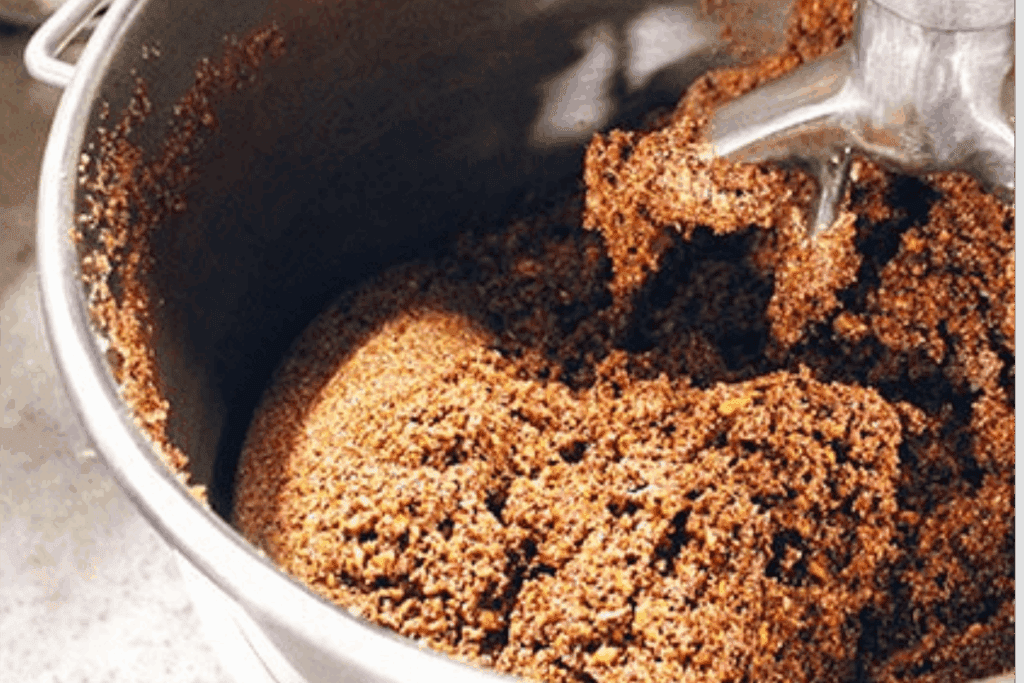
Date paste comes from a whole fruit with a naturally high microbial load. That’s not a defect. It’s the nature of the raw material. Dates undergo harvesting, storage, and processing in ways that introduce and sustain microbial populations before they ever arrive at your facility. The paste itself is dense, moist, and nutrient-rich. This environment actually supports microbial activity rather than suppressing it.
Here’s where it gets deceptive: date paste bars often have higher water activity than people expect. The finished bar might feel firm and dry, but the water activity in a date-heavy matrix can sit in a range that is technically controlled but leaves very little margin. A small shift pushes water activity into dangerous territory. That shift could come from slightly wetter incoming dates, longer hold times between mixing and forming, or marginal changes in ambient humidity during production. The product won’t show any visible change, yet the risk escalates.
The dense matrix compounds this problem. Moisture doesn’t distribute evenly in these products. Localized pockets of higher water activity exist inside a bar even when average testing shows acceptable levels. Because the matrix is so dense, heat and moisture move through it slowly. Hold times between processing steps matter enormously.
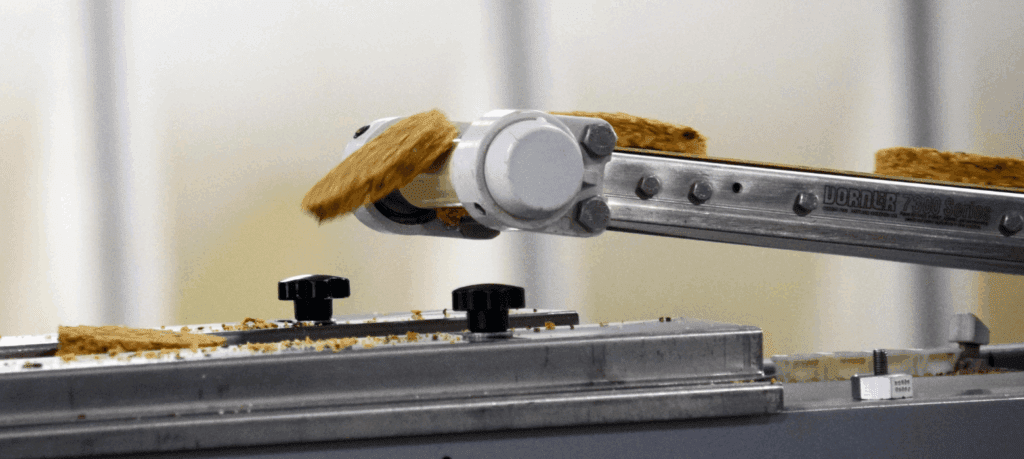
Consider a simple scenario: mixed dough sits in a hopper for an extra thirty or forty minutes while a line issue gets resolved. That’s not a neutral event. It’s a food safety variable that changes the conditions inside your product. Most co-packers have built their processes assuming standard hold times. When actual conditions drift, the food safety implications often go unnoticed.
Why Your Co-Packer Won’t Manage This for You
Here’s the hardest part for founders to hear, but it’s also the most important thing we can say: a co-packer’s food safety and quality systems protect the facility and its certifications, not your specific product.
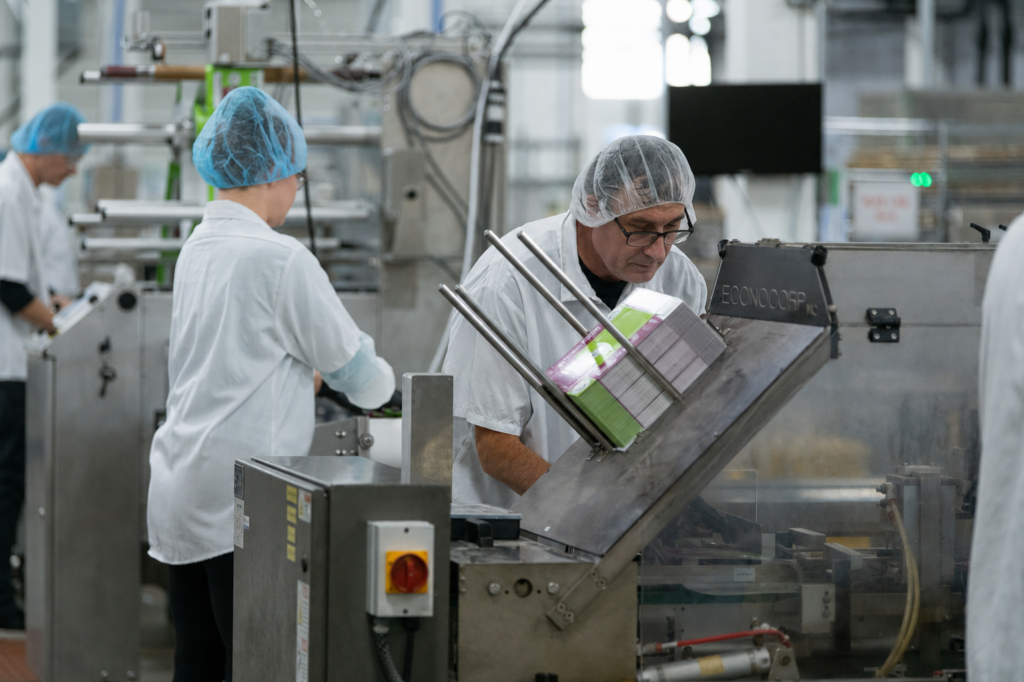
That’s not a criticism. It’s structural. A co-packer running multiple brands across multiple product types builds its HACCP plans, sanitation programs, testing protocols, and release criteria around its facility-level food safety certification. Whether that’s SQF, BRC, FSSC 22000, or another GFSI-recognized scheme, those systems satisfy auditors and protect the co-packer’s license to operate. They don’t manage the unique risk profile of your particular formulation.
When a co-packer runs your date paste bars, they apply their standard operating procedures. Line changeover protocols, environmental monitoring, hold-time allowances: all were designed around the facility’s overall risk assessment, not your product’s specific behavior under their process conditions.
This doesn’t signal negligence. It signals a different purpose. Their system aims to be compliant. Your system needs to be controlled. These aren’t the same thing.
Being compliant means you pass an audit. Being controlled means you understand what’s happening to your product at every production stage and you have the data to prove it stays within your defined boundaries, not your co-packer’s facility boundaries. If you’re a founder relying on a co-packer for date paste bars, understanding this distinction is essential to actually managing your food safety, not just checking a compliance box.
The Case for Brand-Owned Test-and-Hold
If you’re making date paste bars or any product relying on formulation and process control rather than a kill step, you need a test-and-hold program. That program needs to be yours.
Brand-owned test-and-hold means your brand defines the testing strategy: what you test, how many samples, which production points, and which methods. Your brand sets the hold duration, not your co-packer’s shipping schedule. Your brand establishes explicit release and stop-ship criteria, written before any product ships.
Critically, your brand retains decision authority. When results come back, your brand, not the co-packer, decides whether product moves or holds. Your brand owns the trend analysis, reviewing results over time to identify patterns that a single lot result would never show.
This isn’t about distrust. It’s about accountability. A co-packer has financial incentives to ship product and free warehouse space. Your brand has a reputational incentive to ensure every lot reaching a consumer is safe. We’ve seen firsthand what happens when product control slips. When these incentives diverge, you need to know that decision authority sits with the people whose name is on the package.
We’ve seen situations where a co-packer’s internal release criteria would have allowed product to ship that we would have held. Not because the co-packer cut corners, but because their criteria were calibrated to general facility risk tolerance, not to the specific risk profile of a high–water activity, no-kill-step product. The gap between those standards is where brands encounter trouble.
Reading APC as a Trend Signal, Not a Pass/Fail Number
Aerobic plate count represents one of the most commonly tested and most commonly misunderstood indicators in this category. Most brands treat APC as binary: below spec means pass, above spec means fail. This framing misses the entire point.
Treat APC as an early indicator and trend signal instead. A single APC result tells you almost nothing useful in isolation. But APC results tracked over time, across lots, production dates, and seasons, tell you an enormous amount about what’s happening in your manufacturing environment.
A rising APC trend, even when every individual result stays technically within specification, can signal several things. Moisture migration within the product matrix might be occurring as formulation or process conditions shift subtly. Water activity creep might be happening: small, incremental increases that haven’t yet triggered an out-of-spec result but are moving in the wrong direction.
Hold-time drift can also reveal itself through APC trends. The actual elapsed time between processing steps gradually increases without anyone formally changing the procedure. Additionally, these trends expose sanitation limits: not failures, but early signs that your cleaning protocols are approaching their effectiveness boundary.
None of these signals will show up in a single test result. They only emerge when you track data over time and look for directional movement. This is why brand-owned trend analysis matters. Your co-packer is almost certainly not performing this level of analysis on your product. As we’ve written before, the assumption that a co-packer will handle everything is one of the most dangerous fallacies in this industry. They’re checking against a specification. You need to read the story your data tells you.
This Isn’t Just About Date Paste Bars
Everything described here applies beyond date paste. Nut butter–based and seed butter–based products show the same dynamics. High fat content and variable incoming microbial loads create similar challenges.
The same issues emerge in any high-inclusion, dense matrix product: bars, bites, clusters, or balls where sheer product density creates uneven moisture distribution and slow thermal equilibration. They appear across the broader category of shelf-stable foods that rely on formulation and process control rather than a kill step.
If your product doesn’t pass through a validated thermal process that eliminates pathogens, then your product’s safety depends on several interconnected factors. You must precisely control water activity. You must tightly manage hold times. You must rigorously monitor incoming raw material variability. And you must ensure consistent process execution day after day. That’s a lot of variables, and every one demands data-driven management, not assumptions.
The common thread connects what these products look like (simple, shelf-stable, low-risk) with what they actually demand from a food safety standpoint. That gap is where recalls live and where brand-damaging events originate. It’s also a gap that becomes more dangerous as brands scale without building real operational competence.
Compliant Is Not Controlled
We return to this distinction because it matters most. A co-packer can be fully compliant (certified, audited, passing every third-party inspection) and still not control the specific risks your product presents. Compliance is a baseline. Control is what keeps your product safe.
Control means you have your own specifications, your own testing strategy, your own release criteria, and your own trend data. You’re not relying on someone else’s system to catch problems their system wasn’t designed to detect.
Control means you understand the microbiology of your raw materials. You understand the water activity behavior of your matrix. You know which process variables can shift your product from safe to risky without changing how it looks or tastes.
If you’re producing date paste bars, nut butter products, or any shelf-stable food without a kill step, this knowledge isn’t optional. It forms the foundation your brand’s safety and reputation rest on. And it needs to be yours: not borrowed, not outsourced, and not assumed.